Exploring how artificial intelligence can transform children’s literacy learning
About
Founded in 2024, the AILE Lab investigates how artificial intelligence can serve
as a learning partner in children’s literacy learning and development.
What We Study
Conversational AI for Literacy Learning
We design and evaluate multimodal conversational AI learning systems that adopt
structured literacy and multisensory pedagogy to support children’s foundational
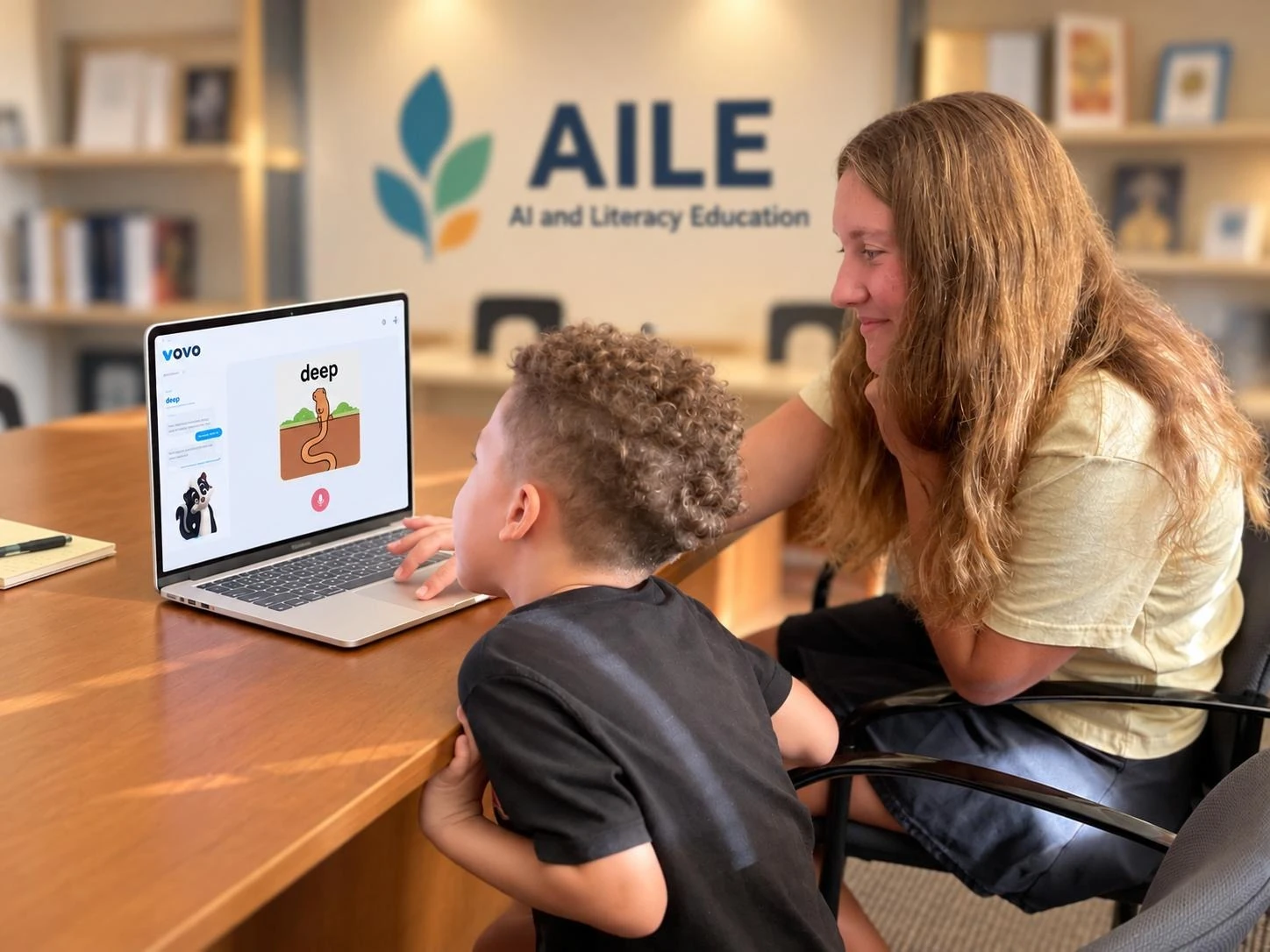
literacy skills. Our current work includes the design and implementation of Vovo,
an AI-enhanced learning system that provides interactive and adaptive learning
experiences to support children’s vocabulary development.
Child-AI Interaction
We investigate how children interact with AI learning partners, how they make
sense of these technologies, and how AI can respond to their learning and
developmental needs. Our work centers children’s perspectives to inform
thoughtful, age-appropriate learning experiences.
AI-Literate Teacher Preparation
Preparing future teachers to understand, evaluate, and integrate AI critically,
effectively, and responsibly in their teaching. We connect interdisciplinary
research with teacher preparation to support informed decisions about AI in
young children’s learning.
Current Projects
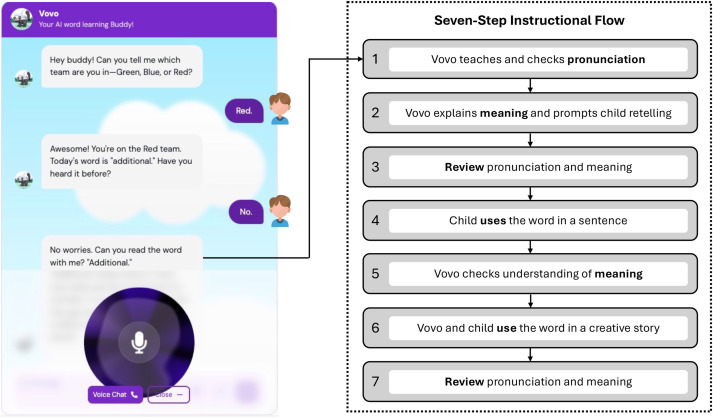
Vovo interface and instructional flow. Quan et al., 2026.
Vovo: Conversational AI for Early Literacy Learning
We design and study Vovo, a conversational AI learning partner that brings
structured literacy instruction into the home. In a six-week study with children
ages 3–7, we compared AI- and caregiver-led vocabulary learning and examined
families’ experiences. Findings highlight both AI’s instructional potential and
children’s preference for learning with parents, guiding tools that complement
the human relationships at the heart of early literacy.
In a study of 74 families with children ages 5–7, we examined how print-based
activities, digital media, and AI use relate to early literacy skills. AI use alone
was not significantly associated with the literacy outcomes measured. This work
informs our focus on purposeful learning experiences, caregiver participation, and
equitable access to resources - not technology adoption alone.
Understanding Children’s Perspectives on AI Learning Partners
We investigate how young children understand the AI systems they learn with.
Following six weeks of home use, children and caregivers explained what made a
conversational AI seem human-like - or not. Children emphasized physical presence and
the distinction between people and computers, while caregivers focused on
conversational performance. These perspectives inform developmentally responsive,
human-centered design for children’s learning.
Digital Tools for Bilingual Language and Literacy Assessment
We explore how digital tools can help families and researchers understand bilingual
children’s language skills as a foundation for literacy learning. In a collaborative
study of MERLS, a web-based Mandarin-English language screener, we examined
parent–child interactions and assessment reliability across in-person and remote
settings. This work informs AILE’s broader design goals for inclusive, family-centered
AI learning tools that respond to children’s diverse language backgrounds.
Through interviews with parents of children ages 6–13, we explored how families use
ChatGPT for questions, schoolwork, storytelling, and play. The study examines both
shared parent–child use and children’s independent interaction, highlighting how
caregiver mediation shapes AI experiences at home. These insights inform our work on
family-centered AI that supports children’s curiosity, language-rich conversation,
and responsible engagement with technology.
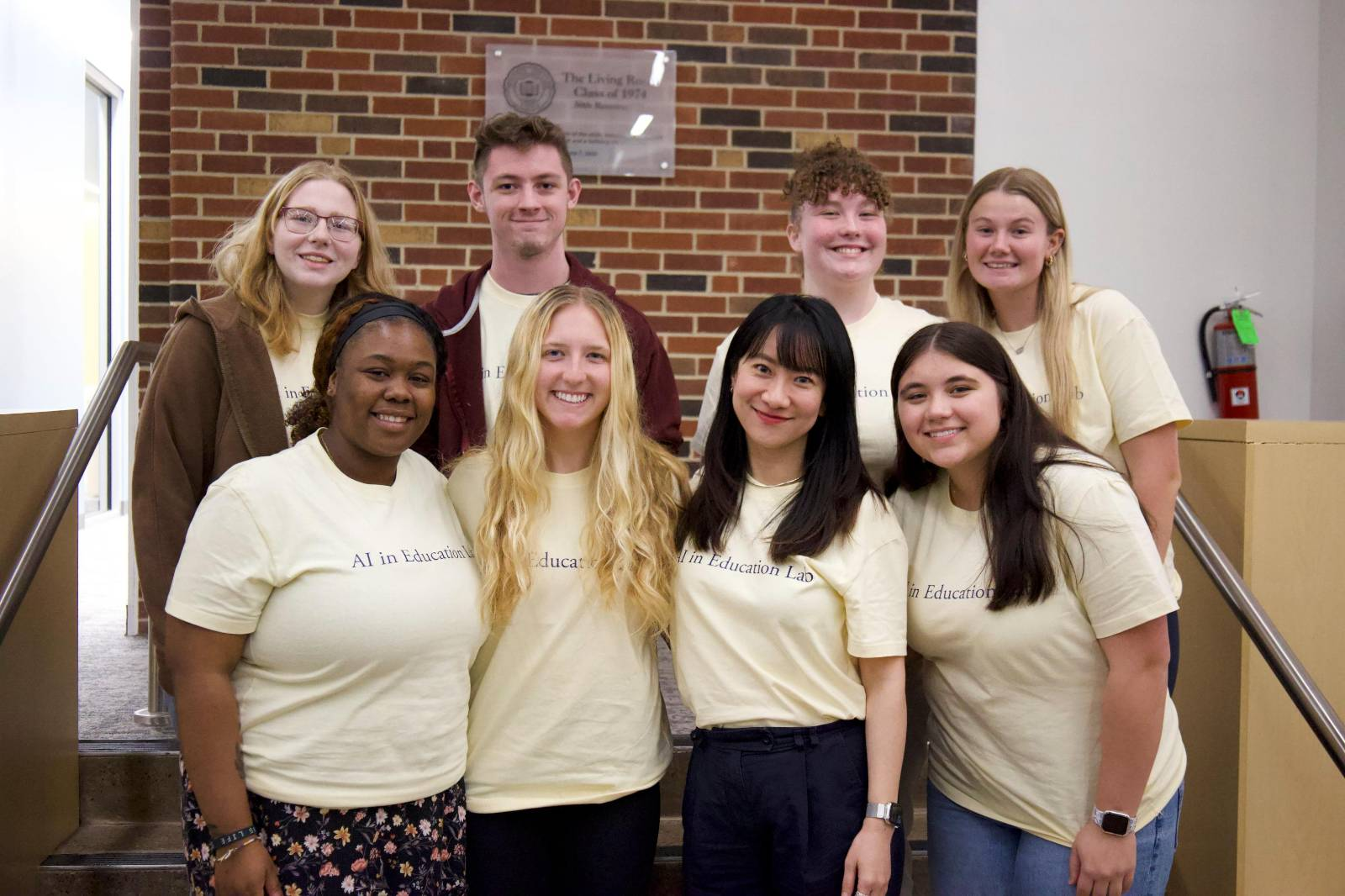
Bringing together researchers and students across Education, Computer Science, and
related fields, the lab designs and evaluates pedagogy-informed AI learning systems
that support children’s language and cognitive development across home, school, and
community contexts.
Lab Director & PI
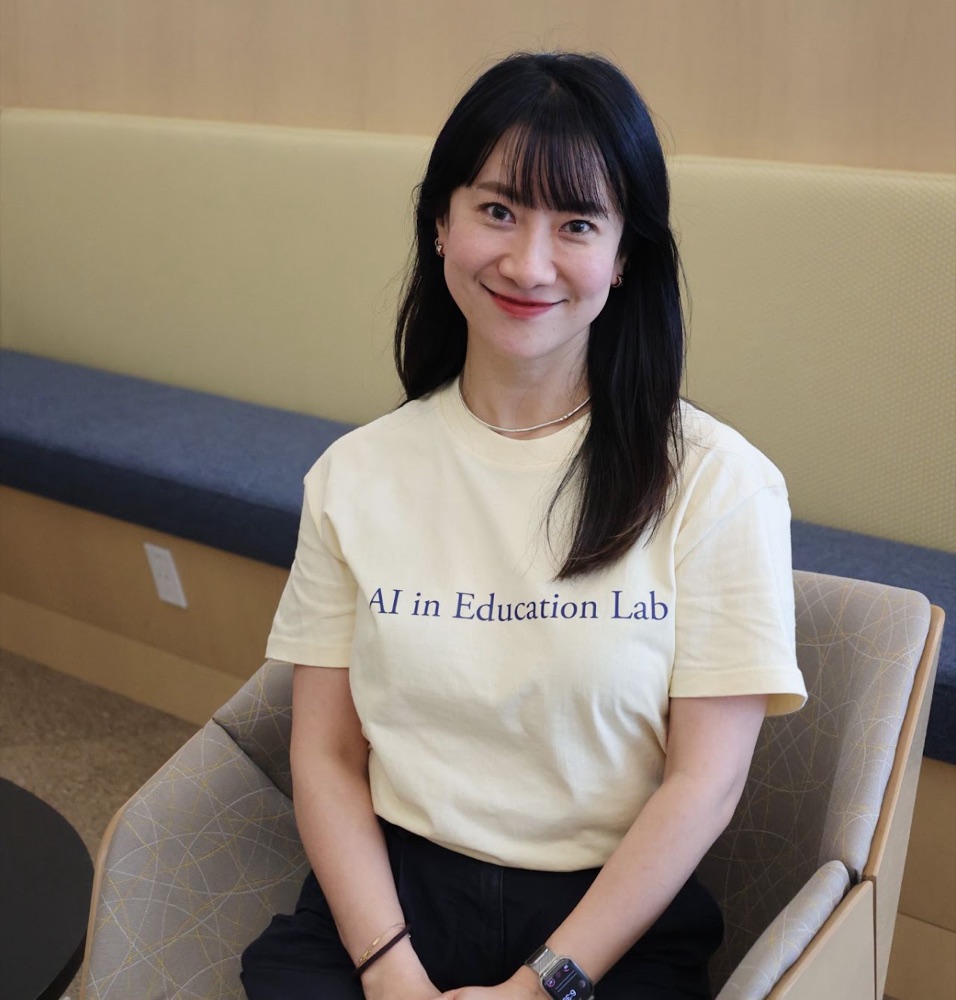
Dr. Shuang Quan
Dr. Shuang Quan is an Assistant Professor of Education at Juniata College.
She received her Ph.D. from Fordham University. Her research explores how
generative AI can support young children’s literacy learning and development.
Through AILE, she mentors Education and Computer Science students in
interdisciplinary research at the intersection of AI, literacy, and child development.
Lab Members
Laney E. Gerdich
Early Childhood Education
Laney explores how AI affects learning and how research insights can inform her
future teaching.
Tatum E. Livelsberger
Early Elementary Education & Special Education
Tatum connects elementary and special education with leadership and learning
center experience while exploring AI in student learning.
Skylar Grabarski
Biology & Education
Skylar is a sophomore studying Biology and Education. Through her work with the
AILE Lab, she hopes to build her research skills and deepen her understanding of
how AI can support
learning in home environments.
Claire Smith (she/her)
Early Childhood Education
Claire is a sophomore majoring in Early Childhood Education. As a member of the
AILE Lab, she is interested in exploring how AI and emerging technologies can
support young children’s learning and literacy development.
Sarah F. Bradley
Early Education & Special Education
Sarah is interested in education’s power to expand access and in supporting
meaningful learning opportunities for all students.
Emma L. Childers
Early Childhood Education & Special Education
Emma brings experience supporting an elementary after-school program and is
interested in responsible uses of AI in future classrooms.
Courtney S. Clippinger
Early Childhood Education
Courtney is building research skills that will strengthen her future classroom
practice and support young learners.
Maddy C. Detz
Early Childhood Education
Maddy looks forward to contributing to collaborative research and applying its
insights in her future work as an educator.
Ava S. Gummer
Early Education & Special Education
Ava is interested in understanding how artificial intelligence can shape
student learning across inclusive educational settings.
Hannah F. Johnston
Early Elementary Education
Hannah advocates for inclusive classrooms and explores how advancing technology
can serve as a thoughtful instructional tool.
Emily D. Ketrow
Early Education
Emily brings a longstanding passion for teaching and enthusiasm for applying AI
knowledge in her future classroom.
Aaliyah D. McGee
Early Elementary Education
Aaliyah is eager to explore innovative, thoughtful ways to integrate artificial
intelligence into classroom learning.
Jayden M. Strausbaugh
Computer Science
Jayden explores educational AI use cases and helps implement technology for the
lab’s learning interventions.
Alisyn S. Wildner
Early Childhood Education & Special Education
Alisyn brings experience working with children and explores how AI can support
thoughtful future classroom practice.